
If Yellowstone Erupts, Here's Who Gets Hit First
Nov 22 · 10 minutes
In the USGS super eruption model, Billings gets over 1 m (3 ft) of ash, Denver about 10 cm (4 in), New York 2.5 mm (0.1 in). Town by town, with sources.
Animated science films drawn with code, every number sourced. New Shorts daily at 5:45 PM Central, long films Sundays.
The long films, newest first. Each takes one big question all the way. Press play to watch here.
Nov 22 · 10 minutes
In the USGS super eruption model, Billings gets over 1 m (3 ft) of ash, Denver about 10 cm (4 in), New York 2.5 mm (0.1 in). Town by town, with sources.
Nov 18 · 9 minutes
Merer's logbook shows his crew, probably about 40 men, shipping limestone to Giza, two round trips every ten days. How the blocks went up is not in it.
Nov 15 · 8 minutes
A ball of solid iron about 2,400 km (1,500 miles) across, about as hot as the Sun's surface, kept solid by pressure. Inge Lehmann proposed it in 1936.
Nov 11 · 13 minutes
In 1859, 17.5 hours after Carrington saw a flash on the Sun, a magnetic storm as strong as any on record hit Earth and ran the telegraph wires.
Nov 8 · 14 minutes
A steel plug stops vandals dropping things like bricks down it. Hell had nothing to do with it. The Kola hole reached 12,262 m (7.6 miles).
Nov 1 · 9 minutes
Our best bets are dark oceans under the ice of Europa and Enceladus, far from the Sun. Europa may hold twice the water of Earth's oceans.
Oct 31 · 11 minutes
For an ant, a cockroach and a cricket, yes: a fungus, a wasp and a worm steer living bodies. For us, no. Most fungi can't grow at our 37 °C.
Oct 25 · 11 minutes
Some are. The Kraken is the giant squid, up to about 13 m long. No squid has ever been proven to sink a ship, but a sperm whale sank the Essex in 1820.
Oct 17 · 10 minutes
A black hole forms when a dead star's core is too heavy for any pressure to hold. Electrons give way past 1.4 Suns, neutrons past a little over 2 Suns.
Oct 14 · 8 minutes
Mostly marine snow: plankton, dust, shells and poop that fall for months or years. At the Challenger Deep, 11 km down, it piles up for thousands of years.
Oct 7 · 11 minutes · Space
We found no safer planet. Earth is the safest place we checked, and its oceans have about a billion years left as the Sun brightens. With sources.
Newest first, about a minute each.
Four shows, each at its own time. Every one takes a real question and answers it with real numbers.
New episodes in the mornings
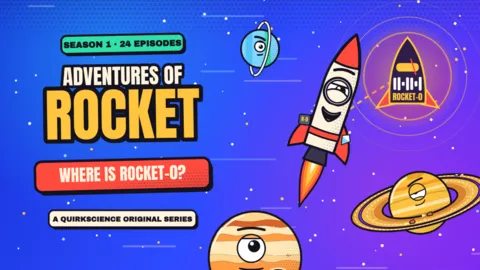
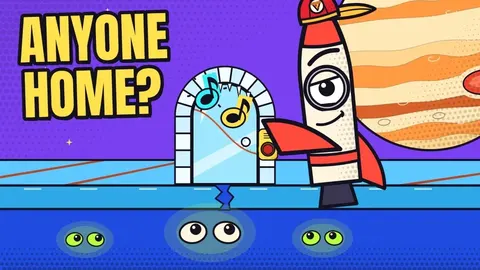
Rocket goes looking for Rocket-0, the prototype that vanished ten years ago. Each stop is a real place in space, and the physics there wrecks his plan.
Newest: Where Is Voyager 1 Right Now?
Monday to Saturday, 5:45 PM Central
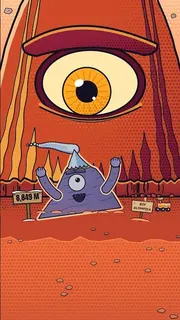
One big question, answered in about a minute.
Newest: Olympus Mons vs Mount Everest
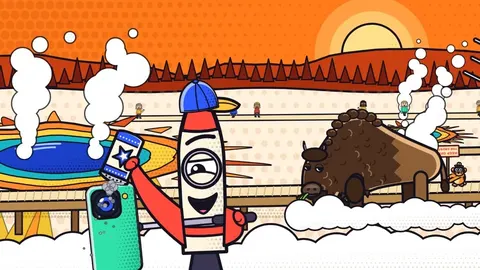
Sundays, 8 AM Central
A long film that takes one question all the way down.
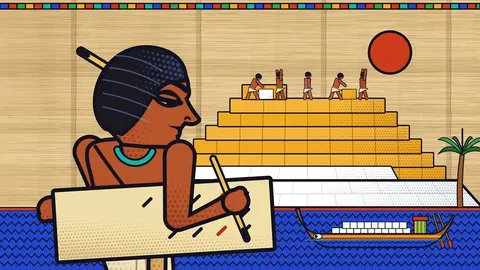
Wednesdays, 9 AM Central, on YouTube
Science history, told as it happened, with the real names and the real numbers.
Newest: How Was the Great Pyramid Built?
Each season goes somewhere new. The newest is first.
Season 3: Down to the Core3 long films · 17 ShortsSeason 3 digs down into the Earth, starting with the deepest hole anyone has ever drilled.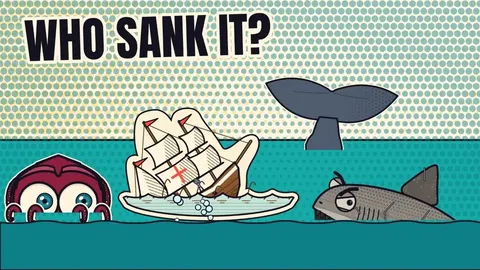 Season 2: The Deep Ocean2 long films · 15 ShortsLong films about the deep sea, with Shorts along the way. With a dive to the bottom of the Mariana Trench.
 Season 1: Earth Has an Expiry Date3 long films · 21 ShortsSeason 1 leaves Earth and heads out into space, all the way to the black holes.
The characters on this page are drawn live by the same code that animates the films. Tap one to see its move.
Our lead. Cocky, and sure it can take us anywhere.
Seen in How Do Rockets Get to Space?
A miner's canary in a hard hat two sizes too big. Forty years an air inspector. His method is fainting.
The voice in every film. Nobody has seen the face, and the Host likes it that way.
Heard in every film
Star of How Will the Sun Die? One day it swells into a red giant and eats the planets closest to it.
Seen in How Will the Sun Die?
The big jelly that holds everything down, rockets included.
Seen in How Do Rockets Get to Space?
A tiny satellite who just found out that orbit means falling forever. Still not over it.
Seen in How Do Rockets Get to Space?
Twelve people have walked on it, and it brings that up a lot.
Seen in Has Anyone Been to the Bottom of the Mariana Trench?
The deeper you go, the harder it squeezes.
Seen in What Happens to Your Body at the Bottom of the Ocean?
Soft jelly with no air inside, so Pressure can't crush her.
Seen in How Deep Is the Ocean, Really?
Calls itself the top of the world. The Mariana Trench goes deeper than Everest is tall.
Seen in Mount Everest vs Mariana Trench
A steel ball that went down on a cable in 1934. Brave, but on a leash.
A crash test dummy, one test from retirement. Never in pain, only inconvenienced. He never says a word.
Seen in How Was the Great Pyramid Built?
See them in a new film every day.
Subscribe on YouTubeWondering about something we haven't covered yet? Send us the question. The best ones become films.
Questions hello@quirkscience.com
Every script is checked against published sources such as NASA, NOAA and peer reviewed papers, and the numbers on screen are the real ones.
We'd love to make films with partners who want science explained well: museums, schools, science organizations and brands.
Write to hello@quirkscience.com with who you are, what you'd like to make and when. We share verified channel numbers once we're talking.